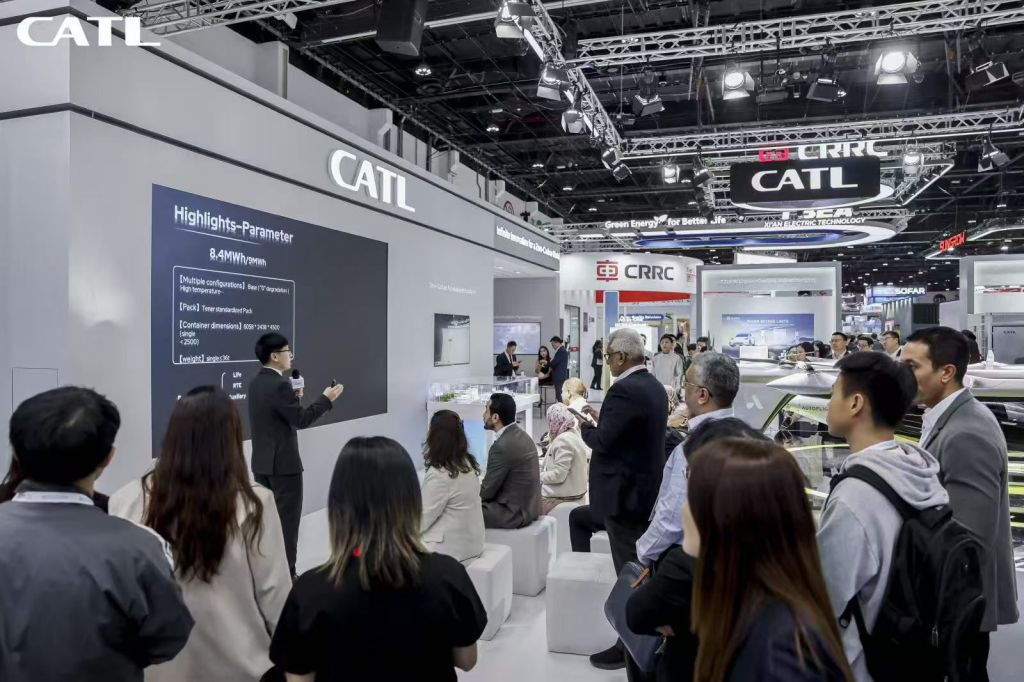
CATL showcased its latest energy storage technologies at the 2026 World Future Energy Summit (WFES), highlighting how advanced storage solutions are supporting the Middle East’s transition toward cleaner, more resilient energy systems as renewable deployment accelerates across the region.
The global energy technology company participated in the Abu Dhabi–based event as governments and industries continue to invest heavily in solar power, electric mobility and infrastructure electrification. While renewable generation capacity has expanded rapidly in recent years, CATL representatives noted that the ability to store, manage and deploy energy efficiently is becoming an increasingly critical part of the energy transition.
“Renewable energy deployment is moving quickly across the region, but storage is essential to ensure stability and reliability,” said Kui Weng, CATL ESS Middle East CEO. “Energy storage allows renewable power to be used more effectively while supporting long-term system performance.”
At WFES 2026, CATL presented a portfolio of energy storage solutions designed to address key challenges such as intermittency, peak demand and grid stability. Among the highlights was the company’s Tener Stack energy storage solution, developed for large-scale applications and demanding operating environments. The system is designed to support utility-scale renewable integration while addressing practical considerations such as land use, logistics and deployment efficiency.
According to CATL, energy storage plays a central role in improving grid resilience by balancing supply and demand and enabling higher utilisation of renewable energy assets. As solar projects scale across the Middle East, storage systems help reduce curtailment and support more predictable energy planning.
The company also highlighted the role of energy storage in supporting the expansion of electric vehicle charging infrastructure. As public and commercial charging networks grow, particularly for fleet and logistics operations, charging stations are placing increased demand on local power systems.
“Fast-charging infrastructure requires a stable and predictable power supply,” Weng said. “Energy storage can help manage peak loads and support reliable charging performance without placing excessive pressure on existing grids.”
Beyond transport, CATL emphasised the relevance of energy storage for industrial and commercial applications, including ports, logistics centres and manufacturing facilities. These sectors are increasingly adopting electrified equipment to improve operational efficiency and reduce emissions, creating additional demand for flexible and reliable power solutions.
Energy storage enables industrial operators to smooth power demand, reduce reliance on diesel-based equipment and support continuous operations. According to CATL, these benefits are contributing to wider adoption of battery-based systems across heavy-duty and high-utilisation environments.
CATL also noted that events such as WFES provide an important platform for engaging with regional stakeholders, exchanging insights and discussing the future direction of clean energy development. The Middle East is emerging as a key growth market for large-scale energy storage, driven by ambitious national energy targets and rising electricity demand.
The company is committed to continue playing a central role in enabling the region’s clean energy ambitions, supporting renewable integration, electrification and long-term sustainability across the Middle East.
 Arab Daily
Leave a comment