Dubai’s built environment has always symbolized ambition. Its towers and communities reflect not only architectural daring but also the city’s ability to deliver large-scale projects with global impact. Yet the expectations of investors, regulators, and buyers are changing. Today, success is measured not only in aesthetics but also in performance, efficiency, and resilience. N W H Group, founded in 2020, is adapting to this shift by embedding sustainability and innovation into the very core of its service model.
The firm’s guiding principle is straightforward: future-readiness is not a feature added at the end of design, but a discipline applied from day one. By integrating sustainability across advisory, design, procurement, and construction, N W H Group ensures that projects are not only striking on the outside but also efficient, compliant, and valuable for decades to come.
Why sustainability is no longer optional
Global investors are increasingly measuring real estate portfolios against environmental, social, and governance (ESG) criteria. Regulators in Dubai, including Dubai Municipality have set higher benchmarks for efficiency, safety, and compliance. End-users are also more conscious of running costs and energy performance when making purchasing decisions.
Against this backdrop, sustainability is no longer a branding exercise—it is a necessity for competitiveness. N W H Group helps investors navigate this reality by embedding sustainability in every layer of its delivery model.
Services designed for efficiency and innovation
The firm’s eight service lines are structured to deliver value while embedding sustainable choices throughout the lifecycle:
1. Development Advisory
Sustainability begins at feasibility. Advisory work includes lifecycle cost analysis, energy modelling, and long-term operational resilience alongside ROI calculations. This ensures investors see the full economic story, not just upfront capital costs.
2. Project Management
Programs are sequenced to integrate green building targets. Risk registers track sustainability milestones, while reporting dashboards highlight compliance with environmental objectives as clearly as cost and schedule metrics.
3. Development Management
Stakeholder alignment is critical. N W H Group coordinates investors, consultants, and authorities so sustainability choices—such as passive design strategies or renewable integration—are made early and not lost in later stages.
4. Construction Supervision
On site, supervision enforces waste reduction, materials standards, and commissioning protocols that preserve design efficiency through execution. Quality inspections ensure sustainability is not compromised under construction pressures.
5. Design & Engineering Coordination
Consultants are aligned through interface matrices that emphasize envelope performance, right-sizing of systems, and efficient layouts. Digital tools like clash detection reduce rework, saving both time and embodied carbon.
6. Cost & Contract Management
Sustainable technologies are assessed with rigorous payback models. Procurement decisions weigh lifecycle costs and maintenance, not just CAPEX. Contracts include performance clauses to ensure long-term efficiency.
7. Authority Approvals
The firm prepares submissions that comply with Dubai’s green codes and sustainability frameworks from the outset. By designing for compliance, it minimizes iteration cycles with regulators and accelerates approvals.
8. Investor Representation
Sustainability decisions are communicated transparently to investors. Trade-offs between specifications and lifecycle value are explained in commercial terms, ensuring sustainability is never framed as a cost burden but as an investment strategy.
Case in practice: a luxury development
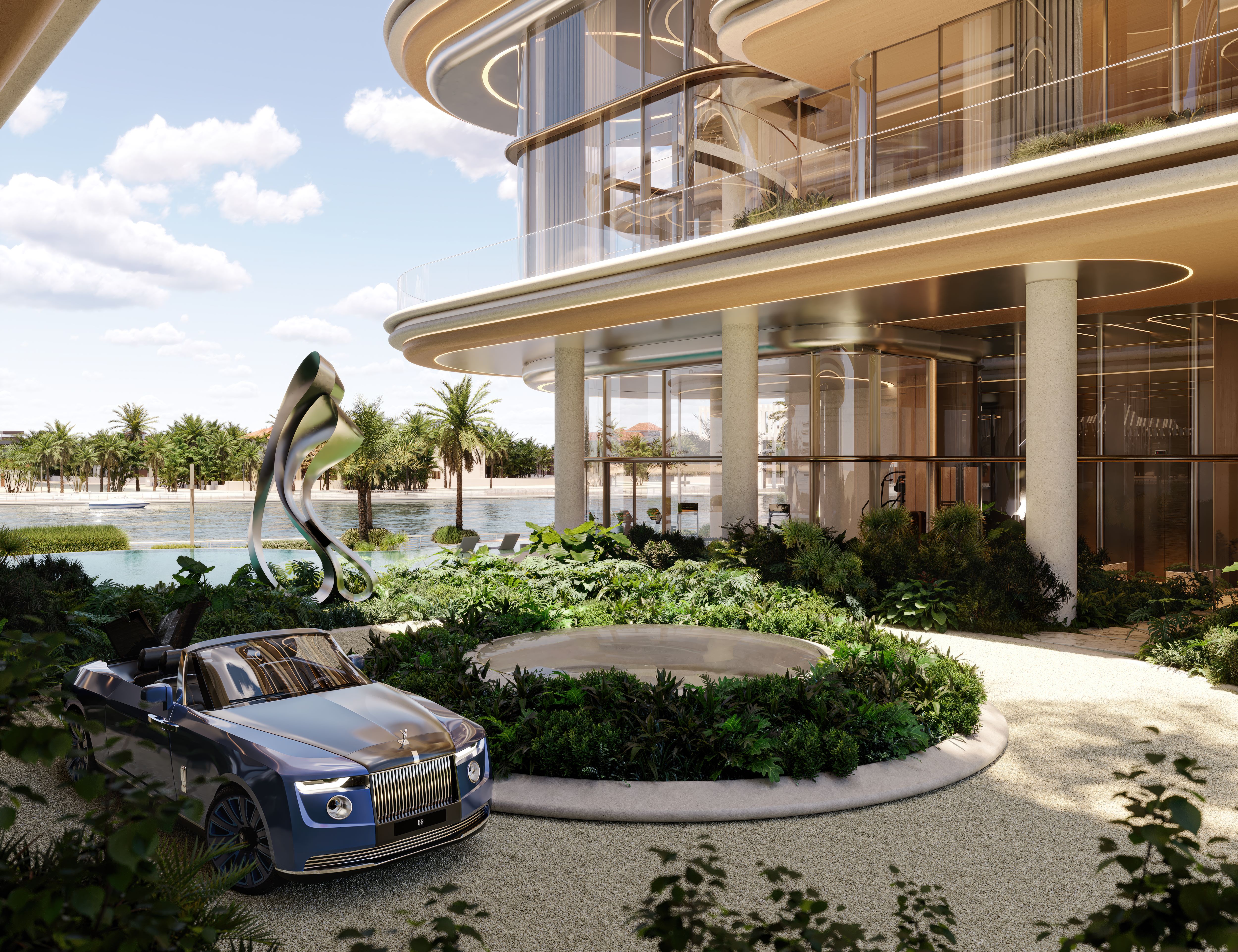
In a recent landmark project, N W H Group applied this model to integrate sustainability into a luxury design. Advisory compared glazing systems for both aesthetics and energy efficiency. Design coordination aligned architects and MEP consultants on system right-sizing, preventing over-engineering that would have inflated both costs and energy use.
During procurement, cost management benchmarked renewable energy options against long-term OPEX savings, allowing investors to make informed trade-offs. On site, construction supervision enforced commissioning standards and waste reduction practices, ensuring sustainability targets survived value engineering.
Caption:
Collaboration with artist Mattar Bin Lahej on “The Rings” — featuring his bespoke sculpture integrated into the project’s design narrative.
The result was a project that balanced ambition with responsibility—delivering architectural impact without sacrificing efficiency.
Why investors care
Sustainability is not just about environmental stewardship. For investors, it reduces risk on multiple fronts:
- Regulatory risk: ensuring compliance with tightening codes.
- Operational risk: lowering running costs, improving tenant satisfaction, and enhancing asset resilience.
- Market risk: improving liquidity, as efficient assets are more attractive to buyers and tenants.
By embedding these outcomes into the baseline delivery model, N W H Group helps investors protect capital and future-proof their assets.
Innovation as discipline, not trend
N W H Group treats innovation with the same discipline as any other project element. It is not about chasing the latest technology, but about embedding tools and practices that survive contact with the site. BIM coordination, data-driven reporting, and digital dashboards are used to compress design iterations and improve decision-making. Smart systems are evaluated not just for novelty but for their contribution to lifecycle efficiency.
“Our view is that innovation should be durable,” says CEO Nabil Wafic Hakim. “Future-readiness means designing for the second decade of operation, not just the first year of sales. We pursue technologies and systems that preserve investor value long after handover.”
Leadership driving change
Hakim’s leadership ensures sustainability and innovation are not treated as parallel tracks but as integrated parts of the same operating system. Contractors are briefed on sustainability objectives alongside program milestones. Authorities are engaged early to align green requirements with submissions. Reporting dashboards give investors visibility into how sustainability metrics are performing against plan.
By treating innovation and sustainability as part of everyday project discipline, N W H Group avoids the common trap of greenwashing or superficial add-ons.
Caption:
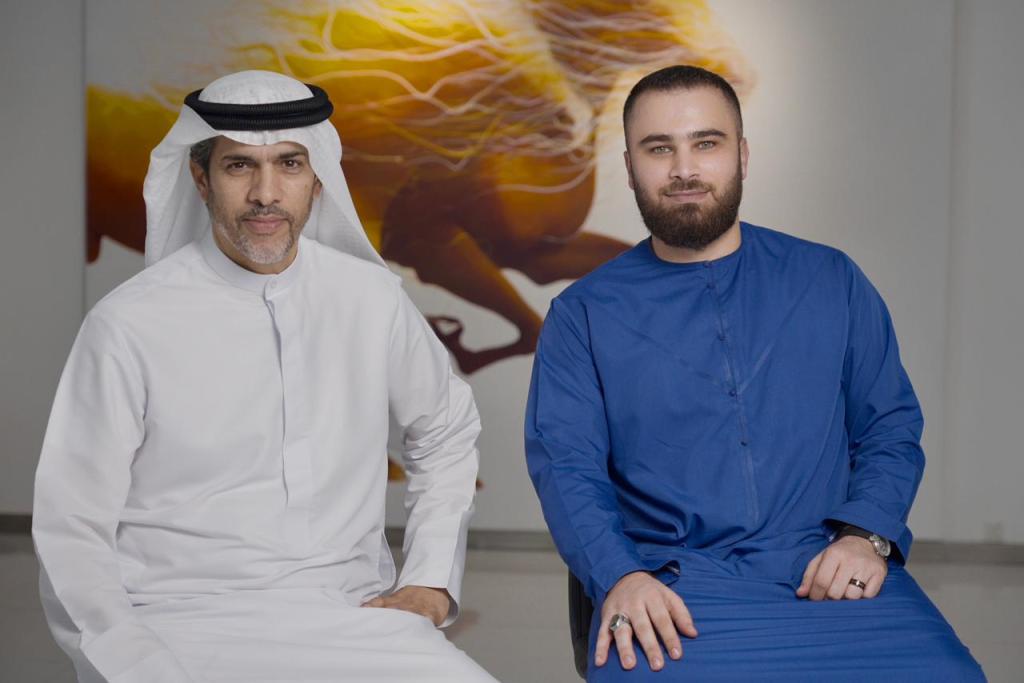
N W H GROUP Founder & CEO Mr. Nabil Wafic Hakim alongside artist Mattar Bin Lahej, the acclaimed calligrapher behind Dubai’s Museum of the Future façade.
The road ahead
Looking forward, N W H Group is expanding its service portfolio to deepen its sustainability focus. Advisory will incorporate more detailed carbon assessments, development management will place greater emphasis on ESG reporting, and construction supervision will enforce commissioning practices designed for energy-efficient operation.
The company is also preparing to deliver more mixed-use and commercial projects, where sustainability can drive significant value through operational savings and tenant demand. By codifying lessons learned into structured playbooks, N W H Group ensures each new project builds on the sustainability gains of the last.
Conclusion
In Dubai, ambition is plentiful, but sustainability is now the competitive edge. N W H GROUP has built a model where innovation and sustainability are not side projects but central disciplines. By embedding efficiency, compliance, and future-readiness across its eight services, the company creates projects that look extraordinary and perform reliably for decades.
For investors, this means more than meeting green standards, it means securing assets that hold value in a changing world; and in Dubai’s evolving market that is the truest measure of success.
 Arab Daily
Leave a comment